The Long-Awaited Arrival of the Foldable iPhone
After years of watching Samsung and Huawei refine the category, Apple foldable iPhone ambitions are reportedly crystallizing under the internal code name “V68.” Unlike its rivals, Cupertino has refused to ship a device with a visible crease or durability compromise. This article dissects the latest supply chain intelligence surrounding the so-called “iPhone Ultra”—a device poised to redefine the segment by entering only when the technology meets Apple’s exacting, professional-grade standards.
Design and Display: A “Book-Style” Hybrid
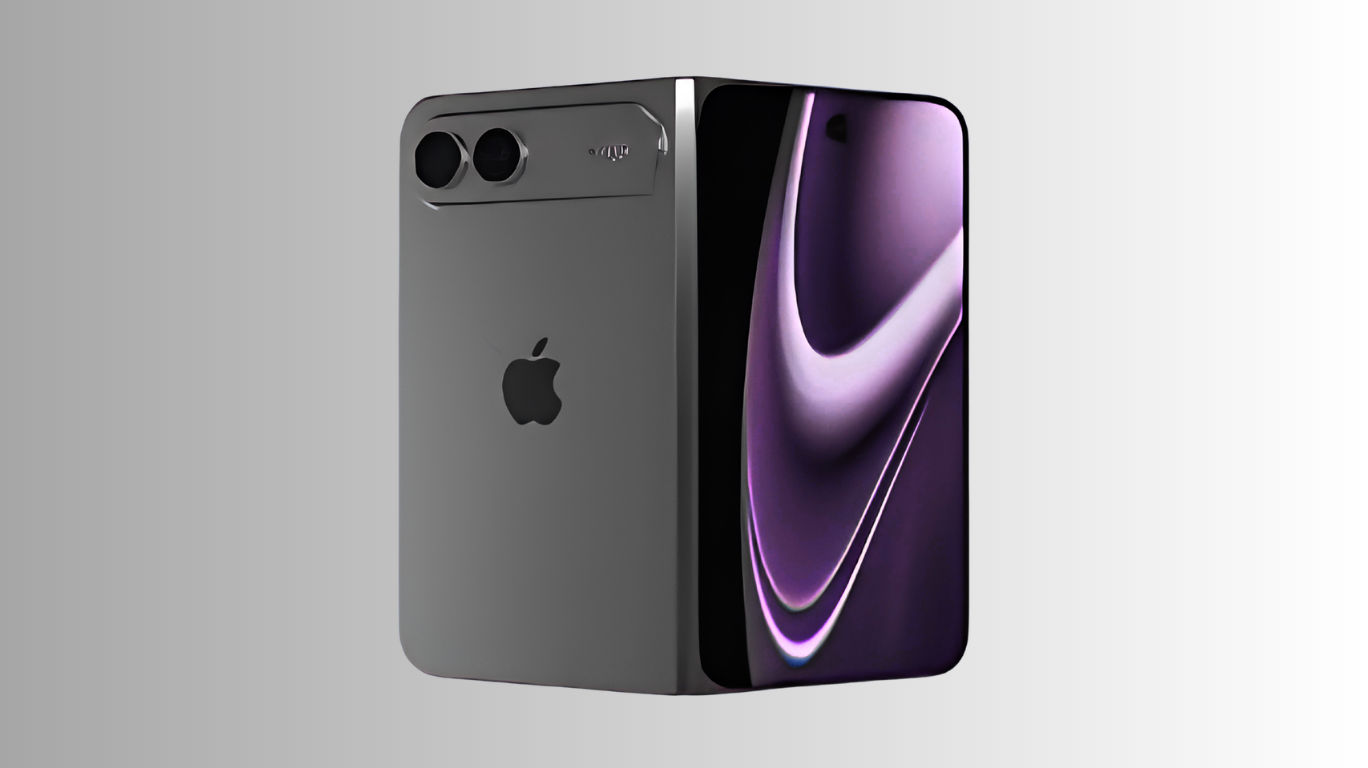
Moving away from the clamshell nostalgia of the Motorola Razr or Galaxy Z Flip, Galaxy Z TriFold, Apple is reportedly converging on a premium “book-style” inward-folding mechanism. The form factor is designed to transition seamlessly from a pocketable, one-handed communication tool to a sprawling canvas for content consumption and productivity
Dual-Screen Experience
At the heart of the V68 project is a stunning dual-display architecture. When closed, users will interact with a highly functional 5.49-inch external cover display. Once opened, the device reveals a massive 7.8-inch internal OLED LTPO screen. This advanced variable refresh rate technology ensures buttery-smooth interactions while intelligently preserving battery life.
Solving the “Crease” Problem
Apple is deep in collaboration with Samsung Display to engineer a proprietary Ultra-Thin Glass (UTG) solution bonded with a new polymer layer that actively resists indentation fatigue. The key metric driving this development is achieving a hinge depth and glass surface profile deviation of less than 0.15 mm. In practice, this sub-hair-width tolerance aims to render the fold line optically and tactilely invisible to the human finger, even under direct, harsh office lighting.
Technical Specifications: Pro-Level Performance
If the “iPhone Ultra” materializes, it will not only be Apple’s most mechanically complex device but also its most expensive to date—and the silicon under the hood is expected to justify that premium. Unlike the iterative chip bumps seen in slab iPhones, the foldable demands a thermal envelope and memory architecture capable of sustaining desktop-class workflows across two active displays.
The A20 Pro Chip and 12GB of RAM
Supply chain analysis points toward the introduction of a new tier of silicon branded the A20 Pro, a variant explicitly designed with a wider memory controller and enhanced thermal headroom. The headline spec is the leap to 12GB of LPDDR5X RAM, a 50% increase over the current iPhone 16 Pro Max. Expect the Neural Engine to see a significant transistor bump, enabling real-time contextual awareness that spans both screens.
Battery and Storage Options
Reports suggest Apple has greenlit a novel stainless-steel-encased 5,500 mAh dual-cell battery, likely employing a stacked design within the two halves of the device. While raw mAh comparisons to Android foldables are often misleading due to iOS efficiency, this configuration is engineered to deliver all-day “Pro Max” endurance with approximately 8-9 hours of unfolded screen-on time. Storage tiers will align with professional expectations, starting at a base of 256GB and scaling sharply to a new summit of 1TB
Features and Trade-offs: The Return of Touch ID
The folding form factor forces a rare hardware concession: the absence of Face ID. The complex, multi-lens TrueDepth camera array simply cannot coexist with the ultra-thin 0.15mm tolerance required for the internal display stack without creating an unsightly punch-hole or severe structural weakness. In its place, Apple is reviving a fan-favorite biometric with a modern twist: side-mounted Touch ID integrated into the titanium power button.
The external camera will utilize MetaLens Technology in order to create a smooth product with a contemporary style, yet retain exceptional optics. This hybrid glass-plastic nanostructure flattens the camera bump profile by bending light more efficiently than traditional stacked lenses.
Pricing: The Most Expensive iPhone Ever?
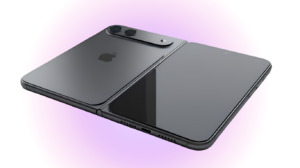
Industry analysts tracking Apple’s bill of materials for the V68 project consistently land on a figure that eclipses even the most extravagant MacBook Pro configurations. The convergence of bespoke titanium tooling, dual LTPO panels with near-invisible crease tolerances, and the 12GB RAM overhead places this device in a fiscal stratosphere previously reserved for luxury horology. This is Apple signaling that the foldable isn’t merely a new iPhone SKU—it’s a new asset class for mobile professionals.
Why it Might Be Called “iPhone Ultra”
Nomenclature at Apple is rarely accidental. The “Ultra” carries a specific, premium weight within the ecosystem, having been reserved for the Apple Watch Ultra’s extreme durability and the M-series Ultra chip’s brute computational force. Applying “iPhone Ultra” to a foldable aligns perfectly with this established hierarchy.
Breaking the $4,000 Barrier
Quality at this scale comes with a historic price point. Analysts within the industry predict that the price for an ‘iPhone Ultra’ will comfortably exceed $3,000 and could possibly even reach $4,000 for a model with 1 TB of memory. With the device being positioned as premium productivity tool rather than just a simple mass market piece of hardware it is expected that only early adopters and professionals will be able to purchase one.
Learn here more about foldable phones values!
Foldable iPhone Release Date and Launch Strategy
Patience remains a virtue in the foldable sector. Enthusiasts have long wondered about the exact foldable iPhone release date, and now fresh supply chain signals point to a clearer window. It seems that Apple plans to announce both the new iPhone and its Foldable iPhone at a conference in September 2026. Because of the technical construction of the foldable phone’s mechanism, Apple will likely release both products in staggered fashion with the phones being offered for public sale in December 2026, shortly after being announced in late-summer 2026. This will give Apple a chance to take advantage of the Christmas season to sell products while also ensuring that there are enough units manufactured for what could potentially be Apple’s priciest and most complicated manufacturing project to date.
Conclusion
The “iPhone Ultra” could be a game-changer in 2026, featuring a seamless display of 7.8 inches, A20 Pro power, and potentially a price tag of over $3,000, but it will still take time. However, the pending engineering indicates that Apple is approaching a point where it will start to redefine the foldable market, not just pursue it like other companies. More innovative technology is on the way as the V68 project gets closer to becoming a reality. Whether you’re waiting for the foldable iPhone release date or simply curious about the apple foldable iPhone ecosystem, the next months promise to be transformative.