Foldable phones promise innovation and premium design, but they also raise questions around durability, repair costs, and resale value. As foldable devices are still relatively new, long-term resale data remains limited, with most models having less than six months of observable trade-in history.
This article examines early resale trends of foldable phones in Singapore using SellUp buyback data, highlighting how different models behave in the secondary market and what factors influence depreciation.
Do Foldable Phones Depreciate Differently?
Foldable phones follow a distinct resale pattern within their category. While they often launch at premium price points and attract early demand, resale buyers tend to apply stricter deductions earlier in the ownership cycle.
Key contributing factors include:
- Mechanical components such as hinges and internal display cables
- Higher repair costs and limited availability of OEM parts
- Lower tolerance for functional or display-related issues during trade-ins
This does not reflect weak demand. Instead, it shows how resale pricing adjusts for higher perceived risk and uncertainty around long-term durability.
Foldable Phones: Resale and Depreciation Comparison
What the Data Shows
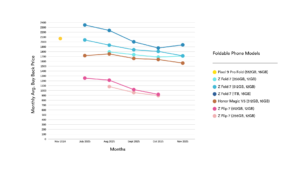
Early foldable resale data shows that the market is still figuring out how to price these devices, rather than following established depreciation patterns.
Models offered in multiple storage variants often experience quicker price adjustments in the first few months. This suggests that resale buyers prioritise device condition and functionality over higher storage capacity once a foldable enters the secondary market.
Differences between foldable designs also matter. Book-style foldables such as the Galaxy Z Fold series tend to see wider early price corrections, likely due to higher repair costs and durability concerns. Flip-style foldables, on the other hand, adjust more quickly but within a narrower price range, reflecting greater price sensitivity among buyers.
For newer or lower-volume models, flat or modest price movement does not necessarily signal strong retention. In many cases, it reflects limited resale activity, where prices have yet to fully respond to market demand.
Overall, since most foldable models have been on the market for less than six months, these trends should be treated as early signals rather than long-term conclusions. As trade-in volumes increase and resale outcomes become clearer, pricing patterns are expected to stabilise.

How to Take Care of Your Foldable Phone to Retain the Best Value
Foldable phones are more sensitive to wear and tear compared to traditional phone designs. Based on SellUp trade-in assessments, the most common reasons foldable devices are downgraded or rejected relate to internal display and hinge-related issues.
To retain the best resale value:
- Avoid excessive force when opening and closing the device, as repeated stress can damage internal display cables
- Keep the hinge area clean to prevent dust or debris from entering the mechanism
- Watch for display issues such as flickering, blank screens, or uneven brightness
- Repair devices through authorised service centres, as non-OEM repairs may affect resale eligibility
- Protect the exterior from back-glass damage, dents, or visible creasing
Damage to internal display cables is one of the most common foldable issues and may cause screens to blank out or fail, significantly impacting trade-in value.
Final Takeaways
Foldable phones tend to depreciate faster not because demand is weak, but because resale buyers factor in higher risk. Limited long-term performance data, higher repair costs, and greater uncertainty around hinge and display durability all affect how much buyers are willing to pay.
Because foldable devices have a shorter resale history, buyers and dealers take a more cautious approach when valuing them. Storage variants, internal display condition, and hinge wear play a bigger role in pricing than they do for conventional smartphones, leading to sharper early price adjustments.
As foldable technology matures and repair standards become more established, resale patterns are likely to stabilise. Until then, foldable owners benefit most from monitoring resale prices early. Checking live buy-back offers on SellUp helps owners understand real market demand and decide the right time to sell before depreciation accelerates.