Introduction
Enterprise hardware upgrades are important for business development. However, if the old laptops or servers are not disposed properly, businesses risk vulnerable data losses and expensive lawsuits. If the old hardware leaves your office premises without a safety strategy, customer data, proprietary content, and other internal communications can fall into the wrong hands.
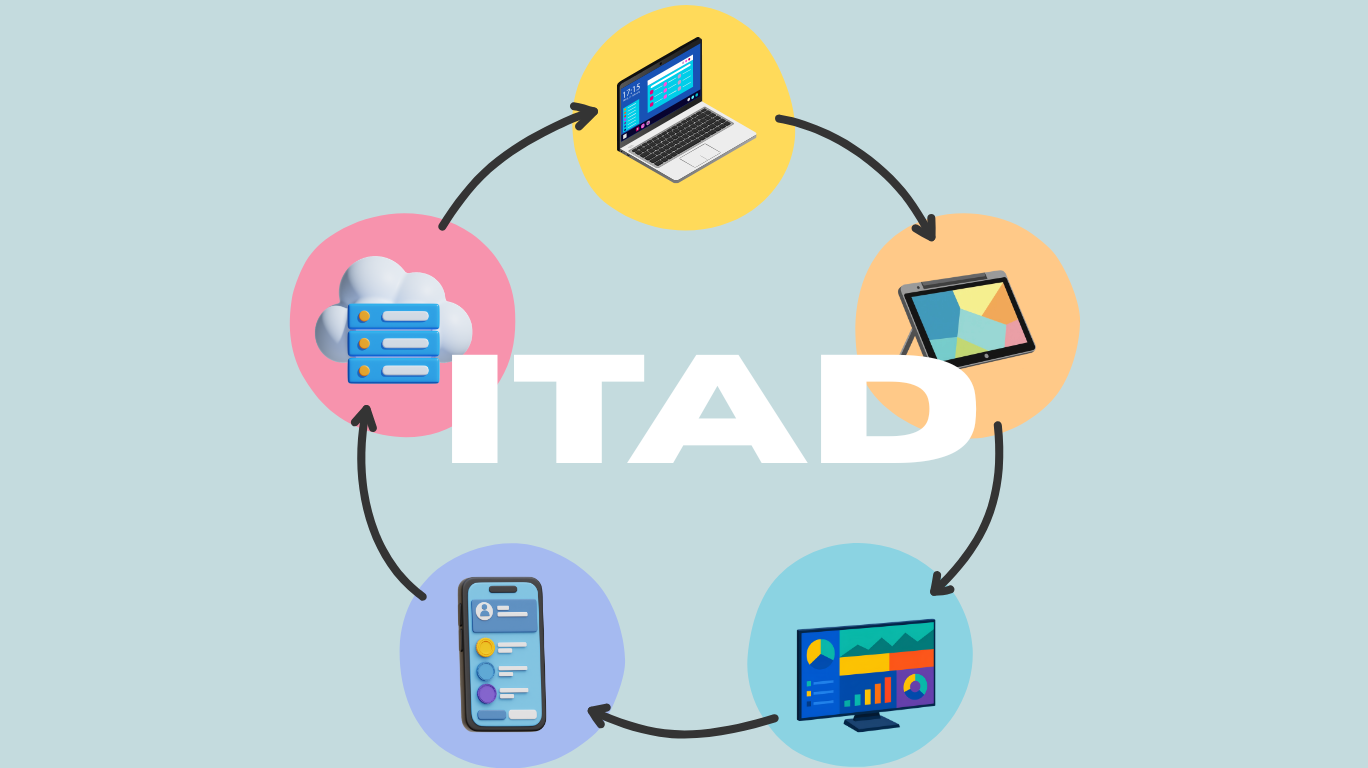
The solution is Enterprise IT asset disposal process, a structured, professional framework for sanitizing, recycling, or reselling corporate electronic assets. For businesses in Singapore, adopting a formal ITAD strategy turns potential security risks and environmental hazards into a secure, compliant, and cost-effective process.
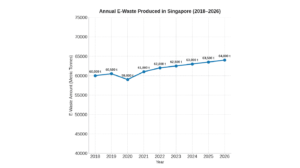
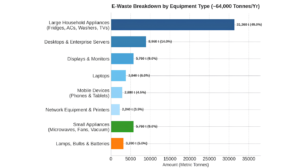
How Much E-Waste Does Singapore Generate Each Year?
Why a Trusted IT Asset Disposal Service Matters
A professional and reliable IT asset disposal provides:
- NIST 800-88 or DoD 5220.22-M regulatory compliance.
- Certificates of Data Destruction tied to specific serial numbers for audit verification.
- ISO 14001 for environment compliance.
- ISO 27001 for security compliance.
- Comprehensive audit reports.
- Secure chain of custody.
- Transparent asset valuation.
- Full compliance with e-waste disposal laws (RCRA)
- Upfront pricing schedules for logistics.
- Strict adherence to privacy regulations like HIPAA, GDPR, FACTA, and PCI-DSS.
Why Cutting Corners on IT Asset Disposal Service Can Backfire
Cutting corners on IT Asset Disposal (ITAD) turns retired hardware into a massive liability.
- Sensitive data may not be securely erased.
- Risk of leaks.
- Identity theft.
- Regulatory fines.
- Reputational damage.
- Environmental harm & fines.
- Missed opportunities for asset resale or value recovery.
- Lack of audit trail & accountability.
Core ITAD Methods: Sanitization, Destruction, and Value Recovery
A good IT asset disposal service combines several methods depending on the condition and sensitivity of each asset. Here are the four core approaches:
Data Sanitization & Overwriting
With this method, all your data can be wiped off the hard disk without damaging it or affecting its components. The software works based on internationally accepted standards like NIST 800-88 or the guidelines offered by the DoD. This way, your private corporate documents will be fully wiped and your computer safe for use again.
Physical Destruction
When storage media reaches the end of its life or holds extremely sensitive data, physical destruction offers complete peace of mind. Magnetic drives are first neutralized using high-powered degaussers, rendering the data unreadable. Afterward, industrial shredders break solid-state and magnetic drives down into tiny metallic fragments, making any future data recovery virtually impossible.
Eco-Friendly E-Waste Recycling
Not every component can be reused. Eco-friendly recycling ensures that incompatible devices are processed through certified zero-landfill channels. The valuable components such as gold, copper, and precious metals are safely taken away while also ensuring harmful materials such as lead and mercury do not become a part of Singapore’s environment.
This helps to achieve the objectives of the circular economy and assists your company in fulfilling its sustainability commitments.
Remarketing & Asset Refurbishment
Retiring old equipment doesn’t mean it has lost all its monetary value. Through testing, cleaning, and professional refurbishment, functional IT assets can be restored to working order. These units are then resold on secondary commercial markets—often with the help of trusted corporate buyback partners like SellUp—allowing your business to recover financial value from decommissioned gear.
Step-By-Step IT Asset Disposal Process
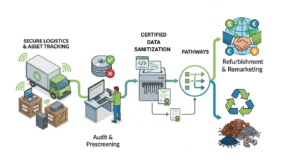
Asset Auditing & Chain of Custody
The process begins by cataloging every single piece of hardware. Detailed inventory logs track serial numbers to ensure complete accountability. Secure transport protocols are then established, guaranteeing that your devices travel safely from corporate premises to processing facilities without any risk of loss or tampering along the way.
Data Erasure & Media Destruction
Next, certified data destruction protocols are carried out depending on your organization’s risk tolerance. Whether performed on-site at your facility or off-site at a specialized processing center, every hard drive and storage device is either completely wiped using certified software or physically destroyed to permanently eliminate all sensitive information.
Hardware Assessment & Triage
Once data is safely removed, expert technicians inspect and evaluate each piece of equipment. Devices are sorted into two main streams: functional units with market value are routed for refurbishment and resale, while broken or obsolete components are categorized for raw material extraction and eco-friendly recycling.
Certification & Compliance Reporting
At last, you get the final documentation in the form of Certificates of Data Destruction (COD) and thorough audit logs. This proves that all the assets have been properly wiped or recycled in accordance with applicable regulations.
Security Standards & Regulatory Compliance
Data Privacy Regulations
Proper ITAD ensures full compliance with critical global and local privacy mandates, such as Singapore’s Personal Data Protection Act (PDPA), GDPR, and HIPAA. Secure data disposal protects sensitive customer records and confidential company files from accidental leaks, shielding your business from severe regulatory penalties, hefty statutory fines, and long-term damage to your corporate reputation.
Mitigating Third-Party Vendor Risk
Your security team should demand documented, verifiable chain of custody logs and accredited recycling standards from any ITAD partner. Audit trails proof that all assets are tracked, handled, and sanitized in accordance with strict industry requirements thus ensuring that there are no loopholes or security gaps.
Financial Value Recovery
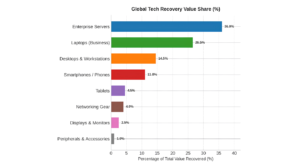
A structured ITAD program isn’t just a cost center—it actively generates revenue. By testing, refurbishing, and reselling used enterprise equipment on secondary commercial markets, businesses can reclaim significant capital. The financial returns recovered from legacy hard drives, laptops, and servers directly offset operational IT overhead and boost your future hardware refresh budgets.
Discover here all the potential financial value of the tech recovery process.
Next Steps for IT Leaders
Start by conducting a thorough assessment of your current processes related to offboarding retired devices – look at the loopholes in how retired devices are managed in terms of storage, tracking, and wiping. The next step is to get in touch with certified disposal providers like SellUp , who can provide documented details of the IT asset disposal process.
Final Words
Disposing of IT assets means much more than just throwing away trash, as it is a significant aspect of contemporary corporate governance, robust cyber safety, and sustainable ESG commitment. By utilizing a well-structured ITAD plan, a company protects itself from costly data breaches while remaining in compliance with data protection regulations like Singapore’s PDPA and limiting environmental contamination from electronic waste. Moreover, it allows unlocking hidden financial assets from the obsolete hardware that can be spent on future projects.
Looking for data destruction service? Find out what it actually means beyond the recycle bin