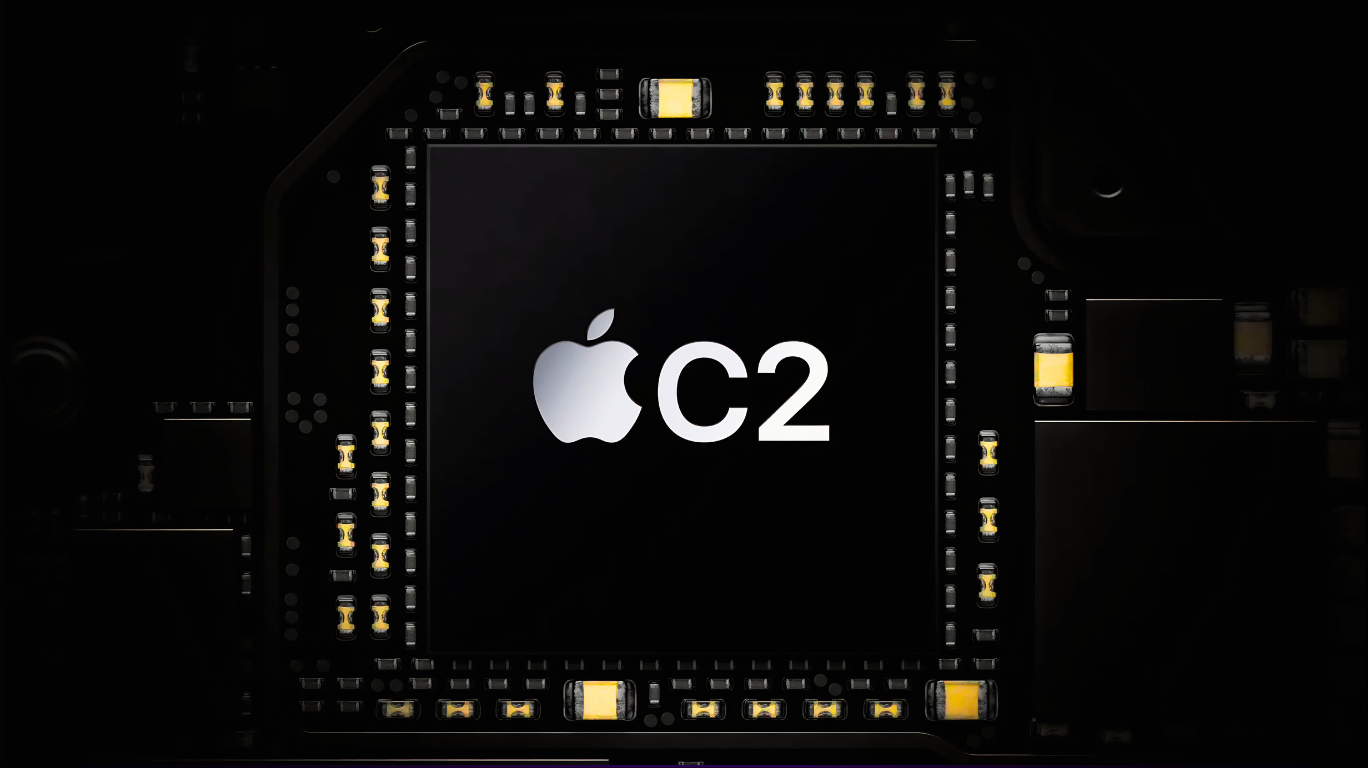
- Apple’s custom C2 chip reduces heat buildup during high-speed data transfers.
- Providing stable connections while throttling antenna power in weak signal areas.
- The C2 modem helps reduce energy consumption by about 15% compared to C1X chip.
Introduction
While raw power and processors often take spotlight when reviewing a phone’s specifications, dedicated chips work quietly in the background to improve the user experience. That’s why in the past Apple Launch Event, the C2 modem, was the most highlighted innovation. It functions as a dedicated power-saving engine designed to extend battery life during heavy network stress.
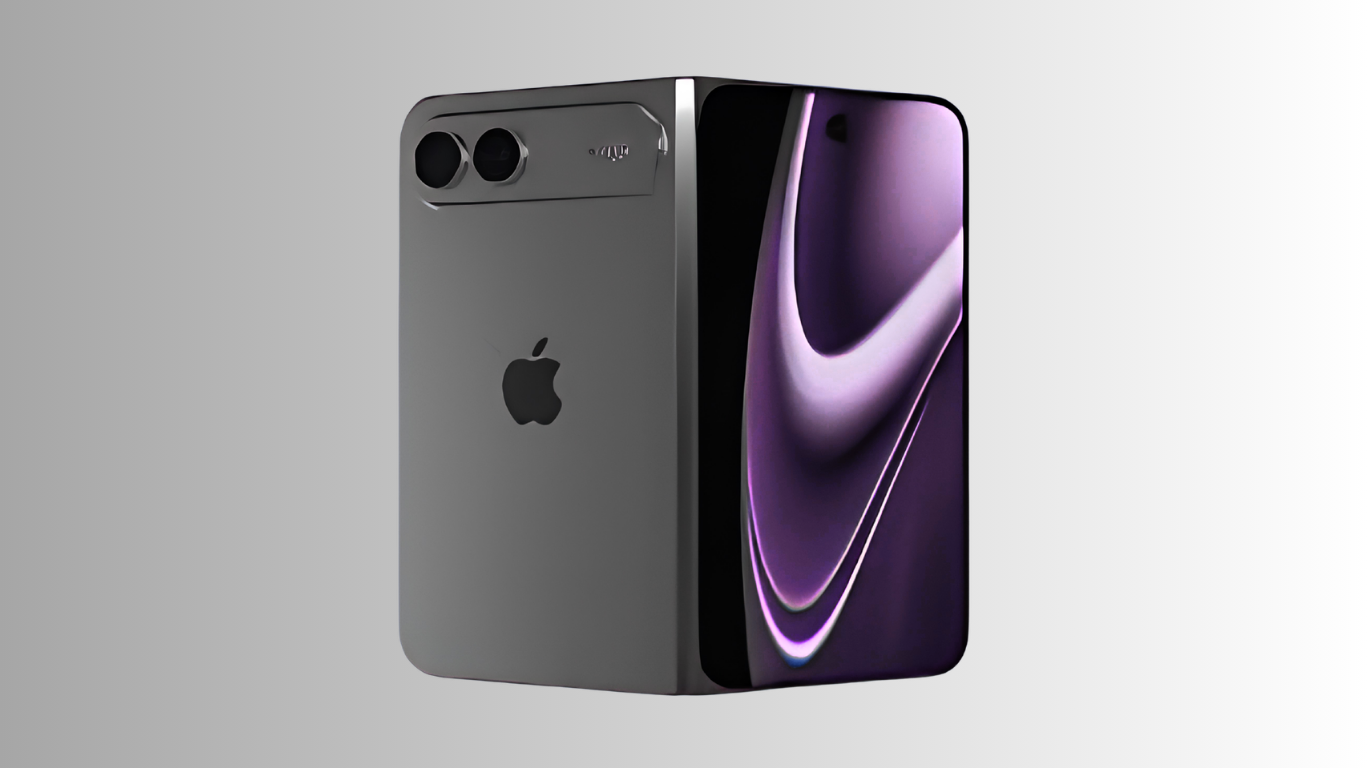
In new models, such as the foldable iPhone Duo, tight internal space can limit physical battery capacity, a challenge when users demand a reliable 5G and wireless connectivity all day. This article examines the features and functions of the C2 chip.
Let’s dive in!
Real-World Testing & Rigorous Global Verification
Behind the scenes Apple conducts rigorous testing on the C2 chip using specialized laboratories with echo-proof chambers. This testing stresses the chip according to various worldwide frequencies so that the problem of dropped connections gets eliminated. By combining internal and practical tests on thousands of mobile networks, Apple’s engineers stated that the operations of the antennas always remain stable.
This systematic and thorough approach ensures that the brand’s smartphones can be used anywhere, such as in the hometown or during travel abroad.
How the C2 Chip Saves Battery
Apple-designed custom silicon reduces power overhead.
Apple’s C2 chip replaces third-party Qualcomm modems with custom-designed silicon, eliminating redundant controller hardware and associated power overhead. What is more, since the chip unifies baseband technologies, transceivers, power management, and software with the help of A20 pro and iOS 27, Apple has managed to eliminate inefficiencies that are related to working with several vendors.
This deep integration allows the processor and modem to work together more intelligently when handling cellular tasks.
Dynamic Signal Scaling and Weak-Signal Optimization
The C2 leverages AI-powered algorithms to dynamically manage antenna power consumption based on real-time signal conditions. The modem, along with the radio system, usually consumes more energy in areas of weak coverage in order to keep connected to a network.
The C2’s tight integration with iOS and Apple silicon enables adaptive power scaling, allowing the device to reconnect more quickly to cellular antennas when traversing low-coverage zones. Engineers designed the settings for background activity, connection policies, and battery consumption through a single comprehensive plan that helps reduce energy consumption by about 15% compared to previous modems.
Reducing heat output generated by high-speed data transfers
Thermal performance is crucial because excessive heat has adverse effects on battery health and continuous runtime. The iPhone 18 Pro and Duo feature a new vapor chamber that is three times bigger than its predecessor and works with C2’s more energy-efficient operation to ensure better heat dissipation.
The C2’s power-efficient architecture directly reduces heat output during high-speed data transfers. The chip does not generate as much wasted heat during cellular operations, allowing the thermal system to keep temperature levels steady over long periods of time.
What the C2 Chip Means for the iPhone Duo Experience
Battery Life
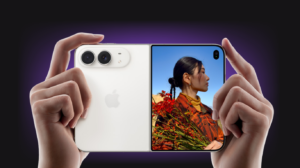
The iPhone Duo’s dual-screen design places exceptional demands on battery endurance, since the expansive inner display consumes more power than a conventional iPhone panel. Apple addresses this challenge through a combination of hardware decisions: an eSIM-only architecture that frees internal space for a dual-battery system, and the C2 modem’s lower energy consumption.
Apple explicitly identifies the C2 modem’s efficiency, alongside the two-battery design and the A20 Pro chip, as a key factor in maximizing battery life. The result is up to 31 hours of video playback on the inner display and 44 hours on the outer screen, demonstrating that the C2 helps enable a thinner foldable without proportional sacrifices in runtime.
Better Connectivity
The C2 modem manages cellular connectivity—radio access, signal conditions, carrier aggregation, and movement between network bands—while the companion N1 chip handles Wi-Fi 7, Bluetooth 6, and Thread. This division of labor creates a larger Apple-designed wireless stack in which shared ownership enables coordinated engineering across local and wide-area connections.
The C2 employs AI-assisted improvements to cellular quality and reliability, though Apple has not published sufficient technical details to determine precisely how its models make network decisions. But we know the C2’s energy management settings allow a lower baseline power draw during activities such as streaming, gaming, and calls. This matters because a modem operates continuously during calls, background transfers, navigation, and weak-signal searches.
The Long-Term Strategy
Apple’s modem program has advanced rapidly from C1 in the iPhone 16e to C1X in the iPhone Air, and now to C2 across the iPhone Duo and iPhone 18 Pro lineup. Each generation expanded either capability, product reach, or both: the C1X delivered up to twice the speed of C1 while using 30 percent less energy, and C2 adds mmWave support that earlier Apple modems lacked.
The C2 is Apple’s first modem positioned to serve nearly its entire premium lineup across major markets, making it a live flagship comparison against Qualcomm. Apple’s stated priorities—speed, energy efficiency, and tighter hardware integration—define an interconnected ecosystem in which the modem, networking chip, and application processor operate under unified control.
Final words!
Apple’s C2 modem is an essential component as the brand introduced model devices with complex form factors and continuous AI data demands. By unifying hardware, software, and dynamic power management, the C2 chip proves that optimized wireless performance is key to sustaining peak efficiency and all-day battery life in next-generation smartphones.
Read here about how the 2026 chip crisis slows tech depreciation.