

Introduction
By 2026, mobile processors have changed from providing raw clock speeds only, to having integrated on-device routine AIs that help restructure the entire smartphone industry. The transition to locally executed processing using flagship hardware means users can run significantly more complex applications than always using cloud-based application servers because processing occurs locally and offers real-time access to your work (i.e., no waiting for the data to arrive from an Internet/cloud service or another physical location). For competitive gamers, this translates to sustained performance improvements and for mobile photographers, the ability to take high-quality images using real-time generative processing.
Now, let’s take a look at how emerging silicon technology is revolutionizing the mobile market today.
The Top 7 Phones with the Best Mobile Processors
Our top seven selection highlights the fastest mobile devices currently dominating the market. These devices are at the top of their class in terms of overall computing power, sustained thermal performance, and hardware/software optimization.
Samsung Galaxy S26 Ultra
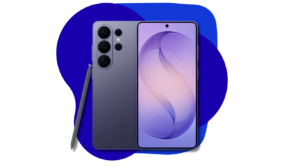
When it comes to cutting-edge mobile processors, the Galaxy S26 Ultra’s Snapdragon 8 Elite Gen 5 for Galaxy is a custom-tuned powerhouse, leveraging a prime core cluster and a radically upgraded Hexagon NPU. This collaborative silicon excels at slicing through intensive tasks without thermal panic. On-device generative AI—live translation, real-time video object eraser—runs with near-zero latency. Whether you’re editing 200MP RAW files, juggling DeX-powered workspaces, or running demanding simulations, the processor dispatches parallel workloads with a confidence that redefines mobile productivity.
Get the best deal for the Samsung Galaxy S26 Ultra here!
iQOO 15 Ultra

Using the latest Snapdragon 8 Elite Gen 5 processor with its 5G capabilities will put an end to the traditional way we look at video gaming. The ultra-fast performance of this new processor allows users to enjoy high-quality graphics without any lag time. The other component that makes up this system is an independent Esports chip which optimizes gaming performance, leading to flawless frame interpolation and resolution upscaling.
This system uses a massive vapor chamber cooling system, as well as active cooling to ensure that it can maintain absolute thermal efficiency, regardless of how long you use your iQOO 15 Ultra or what graphics-heavy AAA (triple-A) games you are playing on it, so the hardware will never suffer from throttling.
Xiaomi 17 Ultra
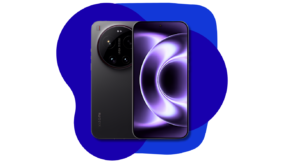
Xiaomi’s 17 Ultra employs a Snapdragon 8 Gen 5 fabricated with an advanced 3nm+ manufacturing process with enhanced power efficiency. Its octa-core CPU and enhanced Adreno GPU generate enough bandwidth for real-time recording of 60 frames per second at 8K with no frame drops. The ISP is designed to perform zero-lag quad camera processing on-the-fly by combining the streams from almost all four sensors simultaneously so that transitions between lenses are flawless. To ensure the chipset can handle its heavy imaging workloads without throttling, Xiaomi has equipped it with a very dense 5,500 mAh silicon-carbon battery, and using a rapid wired/80W wireless charge rate provides constant power to the processing unit under any creative load.
Get the best deal for the Xiaomi 17 Ultra here!
Vivo X300 Ultra
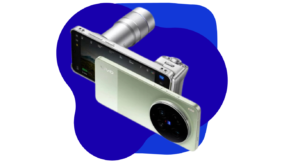
The Vivo X300 Ultra uses a specially tuned MediaTek Dimensity 9400x with a dedicated V3+ imaging coprocessor and advanced AI accelerators. The NPU allows the user to perform real-time semantic segmentation, multi-frame noise reduction, and tone-mapping, which provide a studio-quality computational photography experience even when shooting under difficult lighting conditions. In addition to the camera, this processor architecture offers a smooth experience in cross-app, providing immediate switching between a 4K video timeline, augmented reality filters, and multiple applications at once without any waiting for a reload
Realme GT 8 Pro

The Snapdragon 8 Gen 4 inside of the Realme GT 8 Pro takes CPU performance to new heights due to its new 3.8GHz Cortex-X5 core providing desktop type single-thread processing for demanding workloads. With the combination of the Qualcomm Adreno 760GPU and 144Hz LTPO AMOLED display, gamers will have smooth 120fps gaming in the latest titles, running at max settings, thanks to the use of dual vapor chamber cooling technology.
OnePlus 15

The OnePlus 15 uses Snapdragon 8 Gen 5 in their OxygenOS with little or no background bloat, allowing for more freedom for the processor’s capabilities. Using Kryo CPU and Adreno GPU can maintain full performance over longer periods of time with no thermal throttling while switching from Slack to streaming, and video editing. The device also has a multi-layered cooling system, and up to 24GB of RAM, which will provide a smooth, consistent experience when using the device for years. The overall tuning of the device will make it very responsive in real-world use and provide you with seamless operation on a professional quality daily driver that works every time you pick it up.
Get the best deal for the OnePlus 15 here!
OnePlus Ace 6 Ultra

With MediaTek’s Dimensity 9500 chipset, OnePlus’ Ace 6 Ultra has been developed with gaming endurance in mind. Incubated at an astonishing 4.21 GHz, the Ace 6 Ultra’s main core can comfortably take care of any heavy compute task, thanks in no small part to the low power / high efficiency ARM architecture that allows it to cool easily when running under pressure. The inclusion of an equally capable Mali-G1 Ultra will help guarantee high frame rates even during extended periods of game play without the aggressive thermal throttling found in competing products.
Comparative Breakdown of the Core Architectures
| Smartphone | Processor | Best Suited For |
| Xiaomi 17 Ultra | Snapdragon 8 Elite Gen 5 | 8K Video Creators & Heavy Media Capture |
| Vivo X300 Ultra | Snapdragon 8 Elite Gen 5 + VS1+ | Computational Photography & Visual Editing |
| Realme GT 8 Pro | Snapdragon 8 Elite Gen 5 (Custom R1) | High-Refresh-Rate (144Hz) Competitive Gaming |
| OnePlus 15 | Snapdragon 8 Elite Gen 5 | Bloat-Free Multitasking & Daily Power Users |
| OnePlus Ace 6 Ultra | MediaTek Dimensity 9500 | Sustained Mobile Gaming & Thermal Efficiency |
| Samsung Galaxy S26 Ultra | Snapdragon 8 Elite Gen 5 for Galaxy | Productivity, Galaxy AI & Stylus Workflows |
| iQOO 15 Ultra | Snapdragon 8 Elite Gen 5 | Seamless cross-app imaging workflows. |
Conclusion
Deciding which flagship will meet your needs best in 2026 depends on the types of demands you plan to place on these devices. Those who require maximum speed in their everyday lives with smooth navigation that isn’t burdened down by unwanted software can look to devices using the Snapdragon 8 Elite Gen 5 processor, such as the OnePlus 15 or the Galaxy S26 Ultra. For gamers looking for stable framerate performance without the loss of battery performance over extended periods of time, the MediaTek Dimensity 9500 chip found in the OnePlus Ace 6 Ultra is incredibly efficient from an energy consumption point of view. In the end, the level of raw performance from today’s top-tier chips guarantees that the devices will be around for several more years into the future.
Look at our top 7 mobile phone with the best value for money!