If you want to get the most cash back when you sell iPhone 16, timing is everything. This article breaks down real resale data to help tech-savvy owners in Singapore pinpoint the ideal window to sell—before depreciation eats away too much value.
iPhone 16 Depreciation Curve
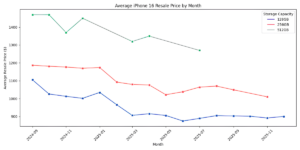
Like most flagship devices, the Apple iPhone 16 doesn’t lose value in a straight line. Instead, it follows a steep early depreciation curve that surprises many owners. Based on real transaction data from SellUp, we saw that across all storage tiers, the sharpest drops happen within the first few months of ownership.
The numbers confirm a tiered pattern: the 128GB base model takes the biggest hit, losing approximately 21% of its original value in that initial window. The 256GB variant fares slightly better, dropping roughly 19.5%. Notably, the 512GB model holds its worth more effectively, declining around 13.6% over the same period. This means higher-storage configurations are not just more capable—they are also more resilient in the pre-owned market. For sellers, the key takeaway is that an iPhone 16’s resale value starts falling quickly soon after purchase, and that base storage models are the most vulnerable to rapid depreciation in Singapore’s competitive secondary market.
The First 3–5 Months Matter the Most
When calculating the optimal time to list your device, understanding the timeline of value loss is crucial. The reality of the secondary electronics market is that the first three to five months dictate where the majority of your device’s equity disappears.
Market data indicates that the steepest drop in resale pricing occurs specifically between the second and fifth months of the apple iPhone 16’s lifecycle. After navigating this volatile window, secondary market prices finally begin to stabilize. A simple framework to guide your selling strategy is dividing the device’s first year into three distinct phases. During the first three months, expect a rapid and aggressive drop in market value. Between months three and six, the depreciation rate visibly slows down. Finally, after the six-month mark, the device enters a phase of gradual, predictable decline. Maximizing your financial returns requires acting decisively before this critical early drop.
So, When Should You Sell?
Best Window: Early (0–3 months)
Selling in the first three months delivers the best outcome. You benefit from highest resale value, strong demand, and minimal depreciation. For tech enthusiasts who refresh their devices regularly, and for anyone ready to sell iPhone 16, this early window is the prime opportunity to secure top dollar before the depreciation curve steepens.
Still Okay: Mid (3–6 months)
By this stage, you’ve already lost around 15–20% of your iPhone’s value, but the price remains reasonable. Market demand is still healthy, making it a practical window for those who delayed selling. You won’t maximize returns, but you’ll secure a solid payout without absorbing the full depreciation impact.
Late: After 6 Months
After six months, prices flatten, and there’s less urgency to sell. However, you’ve already taken the biggest depreciation hit. Selling now is more about convenience than maximizing returns, making it a viable move if you’ve shifted to a long-term upgrade cycle.
Why a Higher Storage Hold Value Better
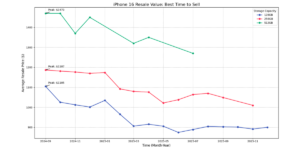
Market data clearly shows that the 512GB iPhone 16 depreciates the least, while the 128GB base model depreciates the most. This discrepancy comes down to fundamental supply and demand dynamics. Higher storage models have a naturally lower market supply and cater to a niche segment of buyers, resulting in significantly less price competition. Conversely, the 128GB model typically floods the secondary market. With an abundance of active listings, sellers face intense price pressure from competitors, which drives down the overall value much faster. Upgrading your storage effectively shields your device against rapid resale devaluation.
Real Market Behavior
Many owners mistakenly believe that by holding onto their device longer, they can “wait out” price fluctuations or that the value will eventually plateau. However, real-world data from the Singapore secondary market suggests the exact opposite for the apple iPhone 16. Depreciation is front-loaded; the most significant value drop occurs shortly after launch. Waiting doesn’t actually preserve your device’s worth; it simply spreads a larger financial loss over a longer period. By the time you decide to sell later in the year, the “savings” you hoped for have already been eroded by the relentless march of market devaluation and newer model rumors. Rushing to offload your device without due diligence can also expose you to common phone resale scams — staying informed helps you avoid pitfalls when you finally list.
What Does This Mean for You?
If you are currently holding onto an unused or spare iPhone 16, you aren’t “keeping” its value—you are watching it slowly bleed away. Every month the device sits in a drawer, its market price in Singapore drops further. To maximize your return, treat your device like a depreciating asset that requires timely liquidation.
Simple Rule to Remember
Sell early if maximizing your return is the priority. Wait only if the device still serves a purpose in your daily workflow. If your iPhone 16 is already sitting idle, the clock is running against you—every week of hesitation translates directly into a lower offer.
Final Takeaway
Navigating the resale market requires a shift in perspective. Remember that iPhones typically lose 15–20% of their value within just the first few months. While base 128GB models drop the fastest due to high supply, higher storage models like the 512GB variant hold their value much better. To secure the best deal in Singapore’s competitive market, the best time to sell is almost always earlier than you think. Don’t wait for the next Apple announcement to tank your current device’s value—act while demand is high and supply is still controlled. If you’re ready to sell iPhone 16, take action now. For a step-by-step guide to getting the highest possible payout, learn how to sell your used device at the best value.